Welkom by die webjoernaal van die Warmbad Renaissance-aftreeoord, Bela-Bela

Welcome to the blog of the Warmbad Renaissance Retirement Village, Bela-Bela

Soek 'n berig in Renaissance

Soek jy na 'n berig in hierdie webjoernaal? Volg die aanwysings hieronder.

Sunday, 24 September 2017

Inwoners verdien 'n klop op die skouer

Ondanks die huidige waterskaarste, doen die meeste inwoners baie moeite om hulle tuine te versorg. Só dra hulle veel by tot die netjiese voorkoms van ons oord.

Hieronder verskyn enkele foto’s ter illustrasie hiervan.

Chris en Liz Snyders (E97) se tuin
Anna van Rensburg (E74) s'n

Thursday, 21 September 2017

"With the onset of spring, I am calm again" - Gustav Mahler

The late Robin Williams was fond of saying, “Spring is nature’s way of saying, ‘Let’s party.'”

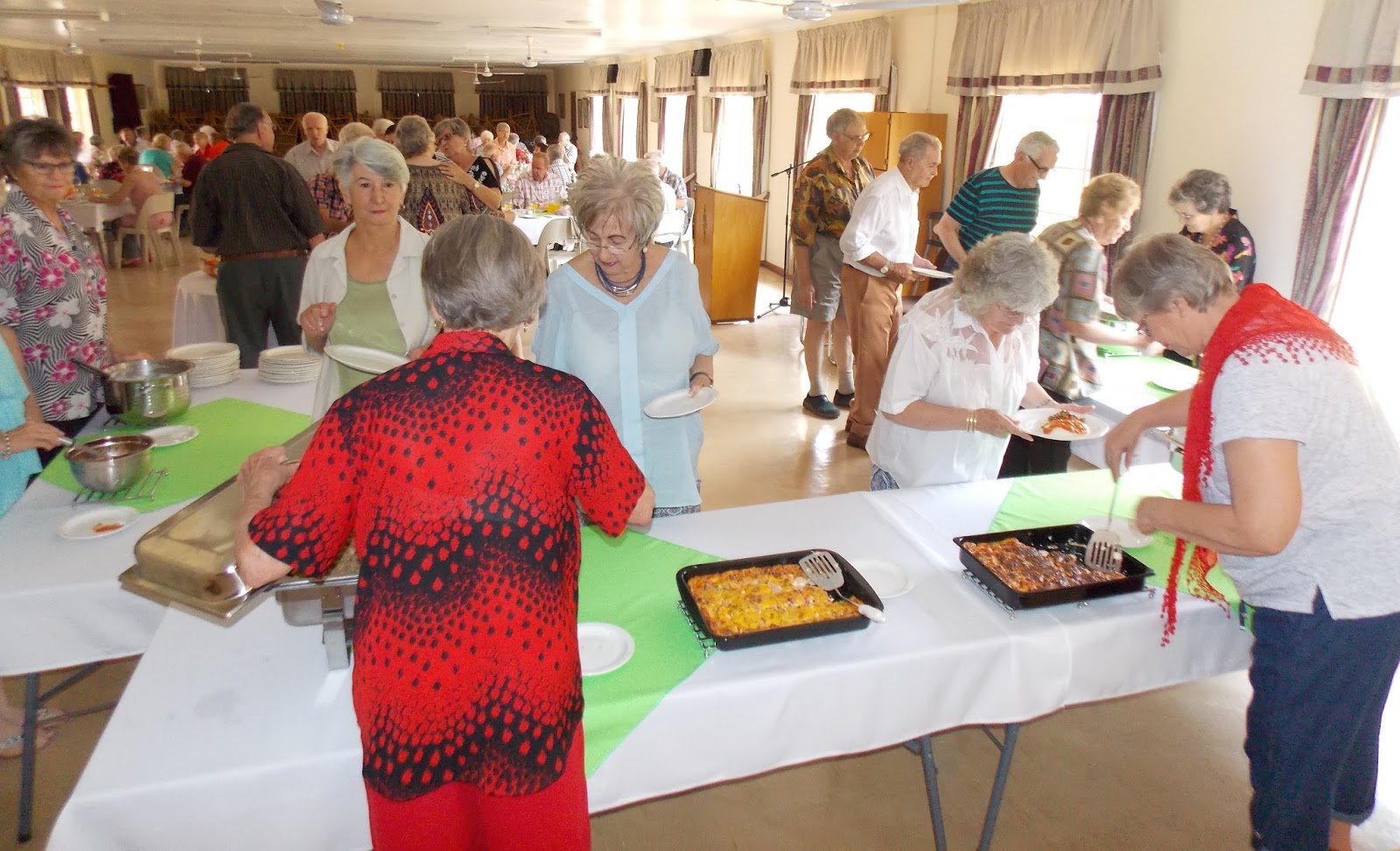
As the following pictures show, the Social Action Group recently responded to his call and provided a marvellous Bushveld Breakfast in celebration of the onset of spring.

Residents helping themselves to the tasty dishes
New residents joined in the festivities. They are (standing, f.l.t.r.) Philip van den Berg, Steve van der Merwe and Klaus Kirchner. Seated (f.l.t.r.) are Georgia Kirchner, Bella van Zyl, Ingrid van den Berg, Sarie Smit, Hester Breet, Marthie Bonnema, and Felicity van der Merwe

Friday, 15 September 2017

Fanie en Dalene Seymore verhuis vanaf Kemptonpark na Bela-Bela


Fanie (65) en Dalene (65) Seymore het onlangs hulle intrek in E53 geneem. Hulle het voorheen op Kemptonpark gewoon.

Dalene is op Brakpan gebore en het in 1970 haar skoolopleiding  aan die Hoërskool vir Kuns, Musiek en Ballet in Pretoria voltooi. Daarna het sy as ‘n verpleegkundige by die H F Verwoerd Hospitaal gekwalifiseer. Die nagdienswerkery by hospitale het haar egter min geval en, nadat sy bedank het, het sy poste by verskeie spesialiste beklee, o.m. by ‘n gastro-enteroloog.

Fanie is in Zeerust gebore en getoë. Hy het in 1970 matriek aan die Hoërskool Zeerust behaal. Hierna het hy ‘n vakleerlingskap as ‘n elektro-meganikus (millwright) by Yskor in Pretoria voltooi. In hierdie hoedanigheid was hy verantwoordelik vir die installasie en instandhoudig van elektriese toerusting. Hy het hom egter mettertyd as ‘n tegniese tekenaar bekwaam. In 1983 het hy ‘n pos by Eskom aanvaar waar hy tot sy uittrede gewerk het.

Die Seymores het pas ‘n droogskoonmakery op Modimolle en ‘n wassery op Bela-Bela aangeskaf. Hulle sê dat hulle tot dusver hulle verblyf in die Bosveld geniet. Hulle voel tuis en veilig in ons oord en het reeds ‘n aantal aangename inwoners ontmoet.

Fanie en Dalene is in 1974 in Waverley getroud. Hulle het een dogter en drie kleinkinders op wie hulle versot is.


Thursday, 14 September 2017

They exchanged one Renaissance Retirement Village for another


Klaus (74) and Georgia (72) Kirchner have recently moved from Glenvista Renaissance to Warmbad Renaissance after purchasing Unit 36. Glenvista is a suburb to the south of Johannesburg. They are pleased with their move away from the hustle and bustle of the big city to the beauty and solitude of the Bushveld.

Georgia was born in Pienaarsrivier, outside Bela-Bela, where her parents owned a hotel. She attended a Catholic school at Potgietersrust (now known as Mokopane). She fondly remembers spending many happy hours growing up at Warmbad, as Bela-Bela was then known.

After completing her education, she joined the Department of Labour in Pretoria where she worked as a clerk.

Klaus was born in a part of Germany that would later became East Germany after the Russians occupied the area during WW2. His father did not subscribe to communism and moved to West Germany. The rest of the family followed him in 1954 and settled in the city of Mainz. Here Klaus became an electro-technician before emigrating to South Africa in 1969 to join the Schindler Group, installing escalators, elevators, and moving walkways.

Klaus and Georgia met in Pretoria, fell in love, got married in 1970 and moved to Cape Town. They have two daughters and three grandchildren who live in England.

Georgia is a competent artist and enjoys cooking and baking, while Klaus is a keen golfer.

Saturday, 9 September 2017

Indigenous tree of the month (6)

As indicated previously, we will provide information during the next few months about the indigenous trees that occur in our village. The purpose is not only to inform, but also to encourage residents to dedicate themselves to their conservation.

This edition features the Sausage tree (Kigelia africana).

PHILIP VAN DEN BERG (U34) writes: Sausage trees are widespread in the tropical areas of Africa. They are large with low-branching trunks and dense, rounded canopies that remain green throughout the year in most areas. During winter they appear like isolated green islands in an otherwise dry and drab environment.

Sausage tree are large and remain green throughout the year
The few specimens growing in our village or along streets in the vicinity are rather small and stunted, mainly because the soil is not as deep and fertile as the alluvial soil sausage trees prefer.

Sausage trees flower for a long period during springtime. The spectacular, prominent dark red flowers hang down from branches on long flexible stems and attract some birds and insects during the day. The main pollinators, however, seem to be bats that are attracted by their scent that is most notable at night.

The flowers are dark red and hang on long flexible stems
A variety of animals relish the flowers. Impala, and browsers such as kudu, nyala, bushbuck and giraffe, are attracted to the flowering trees.

An impala feeding on a flower
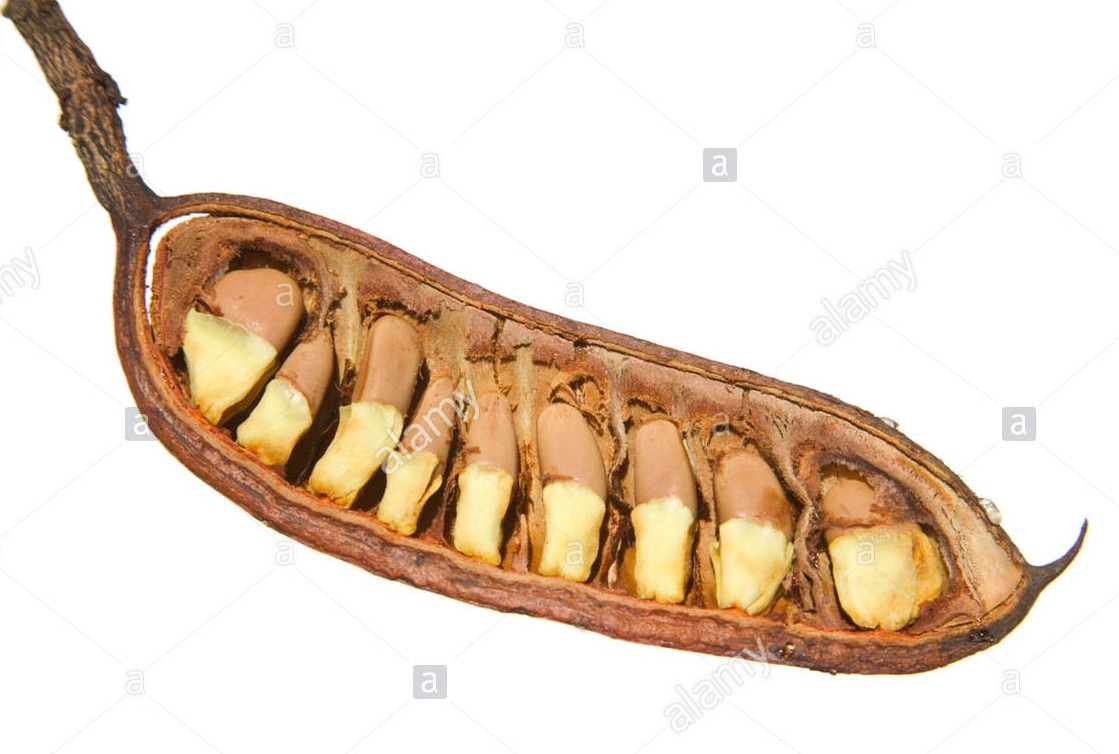
The seeds that are produced after flowering remain on the tree for a very long time and ripe fruit start falling from May through to April the next year. They are huge and sausage-like and weigh up to 10 kg. Parking under a fruiting tree is not advised!

The seeds are large and sausage-like
The fresh fruit is not fit for human consumption, but it can be eaten after roasting the dry seeds or for brewing beer. The wood is widely used by indigenous people to make canoes, oars, utensils and yokes.

Friday, 25 August 2017

Bestuursvereniging hou spesiale algemene vergadering

Ons bestuursvereniging, wat uit die eienaars van eenhede in ons oord bestaan, het op 24 Augustus 2017 ‘n spesiale algemene vergadering gehou.

Die doel van die vergadering was om die geouditeerde finansiële state vir die jaar geëindig 31 Desember 2016 in oënskou te neem en om twee mosies wat voorheen ingedien is, te oorweeg.

Die bestuursvereniging luister aandagtig na die voorsitter, Gerhard van Rooyen
Die finansiële state is deur ons bestuursagent, Frikman Nel, ter tafel gelê. Nel het daarop gewys dat die ons oord se finansies baie gesond is. Nadat hy enkele vrae beantwoord het, is die state eenparig goedgekeur.

Ons bestuursagent, Frikman Nel
Hierna het die bestuursvereniging die stand van ons sekuriteitsmaatreëls onder die loep geneem. Onder andere is die opgradering van hierdie maatreëls bespreek. Die vereniging het besluit dat die huidige sekuriteitsmaatreëls voldoende is.

Vervolgens het die moontlikheid om voorafbetaalde elektrisiteitsmeters te laat installeer, aandag geniet. Die bestuursvereniging het dié mosie verwerp.

Monday, 14 August 2017

Indigenous tree of the month (5)

As indicated previously, we will provide information during the next few months about the indigenous trees that occur in our village. The purpose is not only to inform, but also to encourage residents to dedicate themselves to their conservation.

This edition features the Weeping Boer-bean tree (Schotia brachypetala) In Afrikaans it is known as the Huilboerboonboom. A young(-ish) specimen may be viewed in Kwikstertjie Avenue next to U26.

The Weeping Boer-bean is a medium-sized tree with a low branching habit and an attractive, wide-spreading rounded crown. It is evergreen in our region. The tree gets its showy, new bright red leaves in spring, maturing to a glossy dark green.

The Weeping Boer-bean is a medium-sized tree
The common name of 'Weeping Boer-bean' is derived from the abundant nectar produced by the waxy, crimson flowers during September and October.  The nectar attracts a wide variety of birds and insects.

The flowers produce abundant nectar
After flowering, large seed pods develop which burst open when ripe.

Seed pods
The bark of younger trees is smooth and grey to light brown and as the tree matures it becomes darker and rougher. The bark can be used for dyeing, producing an earthy red-brown colour.

The bark of younger trees is smooth and grey to light brown
The timber is of a good quality and the hard heartwood is a dark walnut colour, and termite resistant. In the past it was used for wagon making, and today it is still used for making furniture. In traditional medicine a decoction of the bark or roots is taken by indigenous people to treat many ailments from heartburn and hangovers, to diarrhoea and nervous heart conditions. It is also believed to purify the blood. The seeds are edible after roasting, and although low in fat and protein, they have high carbohydrate content.